
How Basis closes the AI diffusion gap
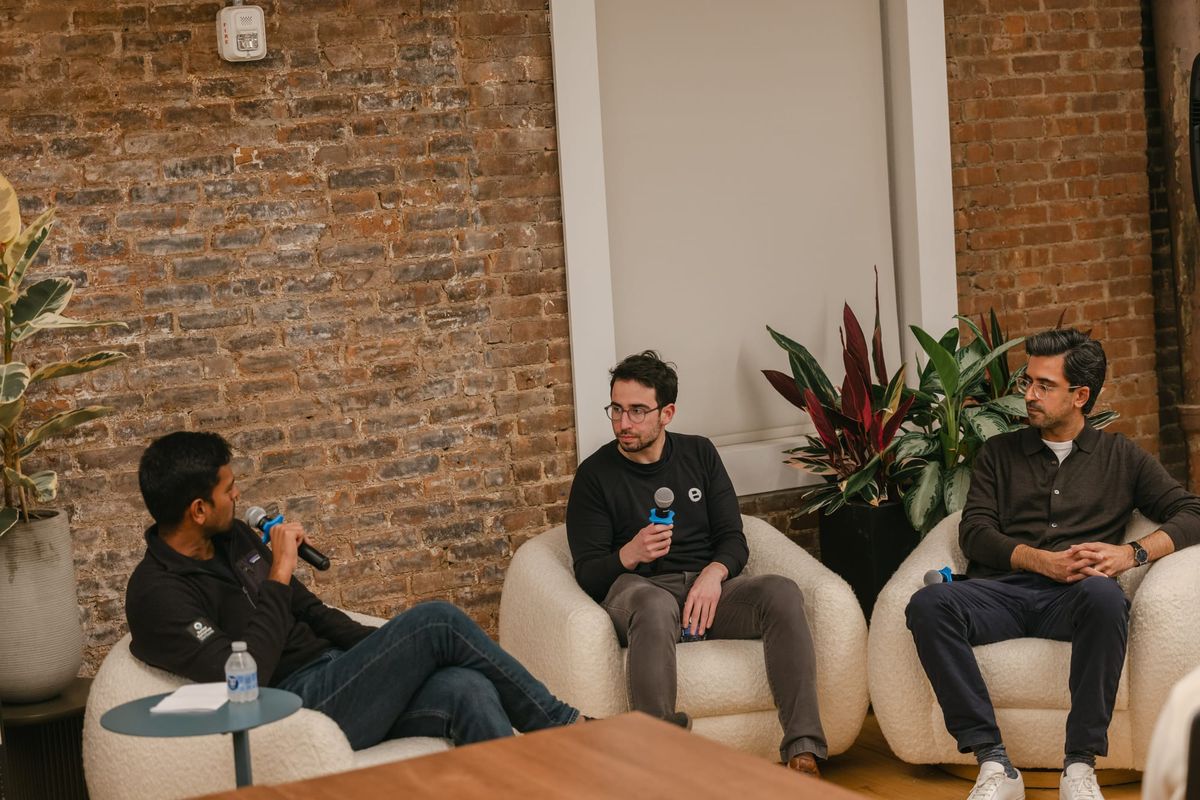
As a part of our ongoing AI event series at Better Tomorrow Ventures, I had the chance to host Mitch Troyanovsky, Co-founder and Nikhil Lohchab, Head of Deployed Intelligence to chat about agent deployment and how Basis closes the AI diffusion gap. Basis' AI agents are purpose built for accounting and are capable of completing entire modules of work across advisory, tax, audit and corporate accounting. To embed and diffuse agents capable of entire workflows, Basis created a Deployed Intelligence (DI) team. Deployed Intelligence should not be mistaken for forward deployed engineering (FDE). Instead, the Deployed Intelligence team is built on the insight that customers will need to transform their mindset and internal systems to adopt agents effectively. Every customer uses the same Basis platform (no customization!) and it's the DI team's job to guide customers to adopt new systems and methods to work with agents. Some interesting takeaways:
- FDE teams customizing for clients is a fundamental bet against the rapidly improving model capability curve: Using forward deployed engineering teams to manually customize a platform for a client inherently means that what is built today will be outdated in the near future. Agents should work off the shelf and with model improvement, what they can do continuously expands. Deployed Intelligence teams should guide customers to be more ambitious with agents.
- Deployed Intelligence is a continuous engagement to build trust: Unlike traditional software deployment, there is no discrete handover point. Trusting agents is an incremental sequence of trust building demonstrated through continuous completion of more complex and ambitious tasks. Trust builds as the agent gets better and as customers watch it perform over months. Most company processes are layers of review built around the weakest performer, so once agents raise that floor, DI can help to support internal process redesign.
- Transforming internal customer processes often means eliminating permissions: Today most agents only act when a human asks, so adoption is rate limited by how fast humans learn to ask or when humans are present to ask. If agents can work on their own overnight, over days, weeks or longer, then DI needs to work with customers to define permissions and SOPs for agents.
- Immediate ROI across the customer set is not a clean unified metric: Measuring exactly what an agent saves would take a level of employee monitoring most firms don't do, so early ROI signals are often qualitative and highly anecdotal. As customers begin adoption, DI is intensely focused on inputs while for longer standing customers, evidence starts to look like books closing earlier with the same staff or firm revenue growing 60%+ with marginal headcount increases.
If you're building in AI and are thinking about agent diffusion into the real economy, we'd love to hear from you!
If you're interested to learn more about roles at Basis, check out their careers page here.