Building Agents: Panel with Jean-Denis Greze (Town) & George Kurdin (Monk)

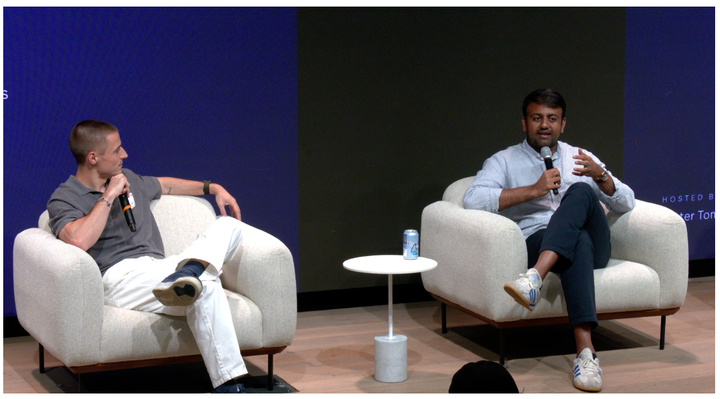
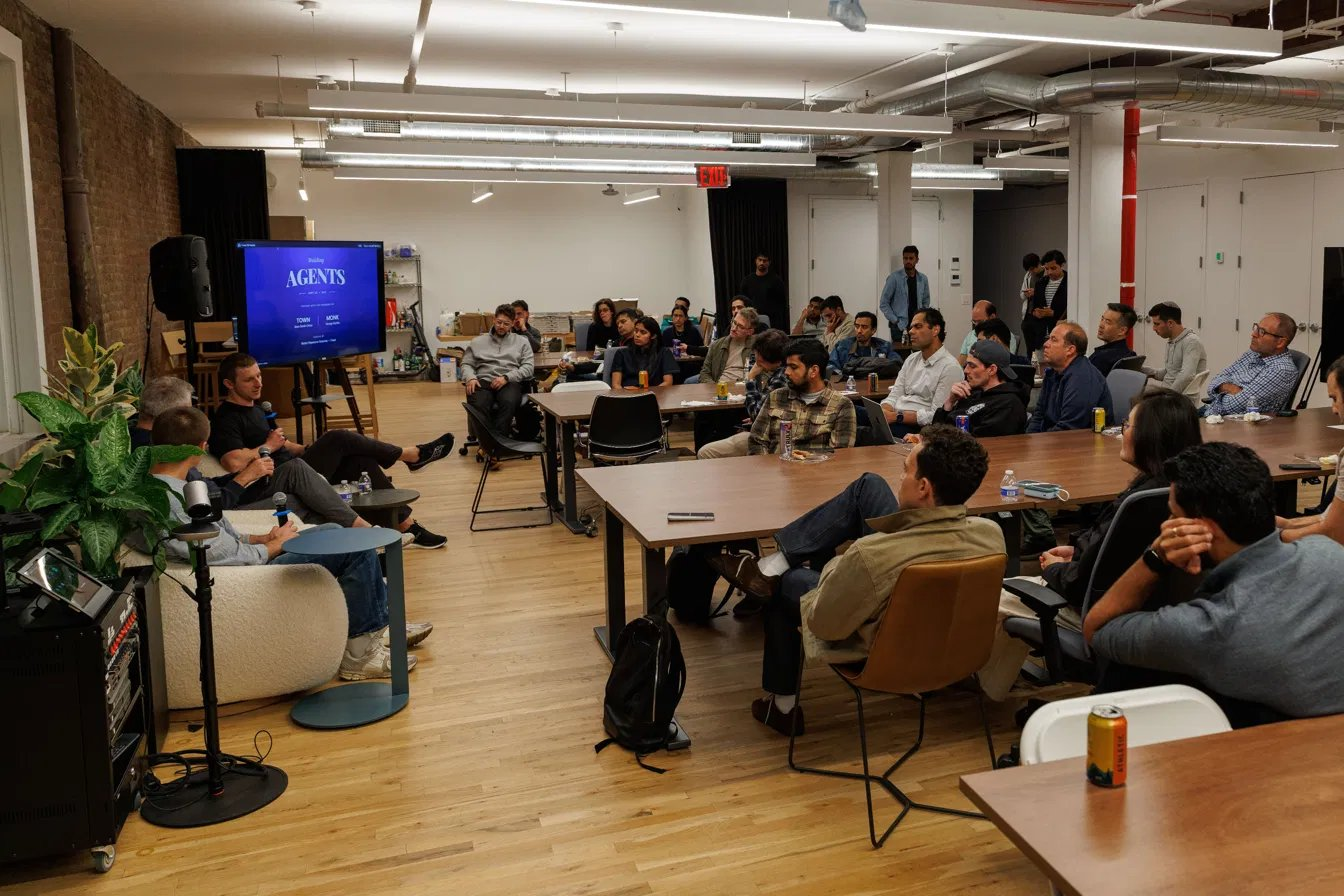
To continue our series of AI events here in NYC, I moderated a fireside on building agents with Jean-Denis Greze (JDG), the Mayor and CEO of Town, and George Kurdin, the CEO of Monk.
Town and Monk have two very different approaches: building agents that work across many different verticals vs. going deep on a single one. Town is building the horizontal AI assistant that learns how you work, and recently reportedly raised at a $1B valuation. Monk went deep on one workflow, AI-native accounts receivable, closed a $25M Series A earlier this year, and already manages billions in AR for companies like ElevenLabs and Profound.
My main takeaways:
- Burn tokens now, fix margins later.
- Horizontal agents break where mistakes cost money.
- Context + SOPs turn into process capital.
- How you eval depends on how wide you go.
- Get ready to fight.
Burn tokens now, fix margins later.
JDG put it bluntly: Town is gross margin negative right now. He knows they could cut costs ~95% with open-weight models and cheaper models for easier tasks, but it's not worth his engineers' time while speed decides who wins. What actually worries him is customers who use Town less because they're afraid of hitting their limits.
George ultimately landed on the same conclusion at Monk. He spent time early on cutting costs, got them down enough, and then went all in on quality.
JDG's line on this was great: "the median valuation of my company is $0, but the mean is $100 billion." On behalf of VCs everywhere, you're welcome for subsidizing everyone's tokens!
Horizontal agents break where mistakes cost money.
JDG thinks horizontal platforms will eat most vertical players over time, with one big exception: anywhere a mistake is really expensive, like payroll or moving money. I asked George what would happen if someone tried to build Monk inside Town, and he said it would break for any serious customer on about action number two. A lot of that comes down to integrations (try pulling the right fields out of [insert enterprise]’s SAP instance).
The stakes are also why Monk's agents can decide which invoice a payment matches or what a collections email should say but deterministic code or the customer's own rules have to sign off before anything actually happens.
Optimize capturing process capital.
Monk has a team that sits down with bigger customers and writes SOPs that tell the agents what to do, down to how each customer wants their emails to sound. Town gets there by spending a ton of tokens preprocessing your data before you ever ask it anything. If you ask Claude or Codex to write an email to Bob "in my voice," they go dig through your old emails to Bob every single time, which is expensive and gets you a slightly different voice each time. Town already has a writing guide for how you and Bob talk to each other, plus a running map of your projects and clients.
JDG's bigger idea is that how a company operates is an asset in its own right. If agents can learn it by watching people work, that knowledge sticks around even when people leave.
How you run evals depends on how wide your agent goes.
Monk is 17 people, and one of its best engineers works on evals full-time. George thinks he still made that hire too late. They're also in Slack with every customer, so if an email comes off a little too rude, they hear about it immediately (this literally happened the day of the event). Town can't test every random thing people use it for. So JDG's evals check whether the agent pulled in the right context and used the right tools, and he trusts the frontier models to get the final answer right from there.
Get ready to fight.
Both founders are in crowded markets where the companies supplying their biggest cost are also potential competitors. Monk plays in a hyper competitive space and George says they are prepared for a proper scrap. JDG is up against everyone who builds software for work: Oracle, Salesforce, Microsoft, Google, OpenAI, and Anthropic. His biggest worry is how fast everything gets copied now. You used to get about a year's head start, and now you're lucky to get a quarter. Neither of them seemed fazed, though.
Both relish the reality of waking up and fighting, and in my opinion that mentality is a requirement in today's world.